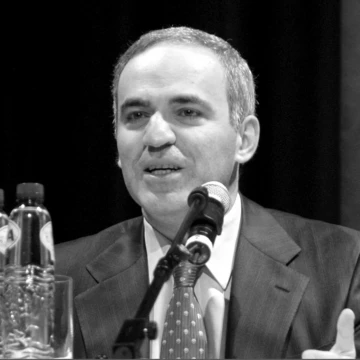
Jose Raul Capablanca
Cuban chess prodigy and third world chess champion.

A chess prodigy, he was renowned for his exceptional endgame skill and speed of play, and his style influenced future world champions Bobby Fischer and Anatoly Karpov.
- field
- Chess
- nationality
- Cuban
Lore & Background
He learned chess at age four by watching his father, and at eight was taken to the Havana Chess Club. He later attended Columbia College in New York, playing baseball and chess, but left university to concentrate on chess. Following unsuccessful attempts to arrange a rematch over many years, relations between them became bitter.
Reader's Guide
Capablanca's significance lies in his extraordinary natural talent and his influence on chess. He excelled in simple positions and endgames, with Bobby Fischer describing him as possessing a 'real light touch'. He could play tactical chess when necessary and had good defensive technique. His book Chess Fundamentals was regarded by Mikhail Botvinnik as the best chess book ever written. Capablanca preferred not to present detailed analysis but focused on critical moments in a game. His style of chess influenced the play of future world champions Bobby Fischer and Anatoly Karpov.
Did You Know?
- Capablanca learned to play chess at age four by watching his father and then beat him.
- He beat Cuban champion Juan Corzo two days before his 13th birthday.
- His book Chess Fundamentals was regarded by Mikhail Botvinnik as the best chess book ever written.
The Havana Prodigy
By his own account, he absorbed chess at the tender age of four simply by watching his father play with friends, then corrected an illegal move and defeated him. At eight he was admitted to the Havana Chess Club, though a physician cautioned against letting him play too often. The following spring, however, he finished fourth in the National Championship, losing both encounters with Corzo.
The Road to the Crown
Capablanca's breakthrough on the international stage came through his extraordinary rapid-chess exhibitions. That feat secured him a sponsored match against Marshall, the American champion, which Capablanca won decisively, 15–8. He later remarked that he had never opened a single book on chess openings. That event, described as one of the five strongest held to that date, featured every leading player in the world except Lasker. Despite objections from Ossip Bernstein and Aron Nimzowitsch over his eligibility, Capablanca defeated both in the opening rounds and ultimately claimed first place with six wins, one loss, and seven draws, finishing ahead of Rubinstein, Vidmar, Marshall, Schlechter, and Tarrasch.
The Art of Simplicity
Capablanca's genius lay not in wild combinations but in an almost preternatural feel for clean, simple positions and masterful endgames. Bobby Fischer later described him as possessing a "real light touch," and his ability to navigate tactical complications when required, combined with solid defensive technique, made him a complete player. He authored several chess books during his career, and his work Chess Fundamentals earned the extraordinary endorsement of Mikhail Botvinnik, who called it the finest chess book ever written. Rather than wading through exhaustive line-by-line analysis, Capablanca preferred to isolate the critical moments in a game and explain why a particular move was decisive. This pedagogical philosophy, along with his broader stylistic influence, shaped the thinking of future world champions Bobby Fischer and Anatoly Karpov. His emphasis on positional clarity and endgame precision became a touchstone for generations of players who admired the elegance of reducing a complex middlegame into a winning technical finish.
Twilight and the Final Move
For years afterward, Capablanca attempted to arrange a rematch, but negotiations repeatedly broke down, and the relationship between the two men soured into open bitterness. Nevertheless, he continued to post strong tournament results throughout the late 1920s and into the early 1930s.
Frequently Asked Questions
What was Capablanca's playing style known for?
He was celebrated for his lightning-fast play and an almost supernatural ability to convert endgame positions. His intuitive grasp of the later stages of a game set him apart from nearly every other master of his era.
Which later world champions were influenced by Capablanca?
Both Bobby Fischer and Anatoly Karpov have pointed to Capablanca's approach as a major influence on their own play. His emphasis on clean, logical technique in the endgame became a model they studied and emulated throughout their careers.
More in Chess Masters 1-17
Spotted an error? Know more?
This is a living reference — every entry is fact-audited, and reader corrections feed straight into our audit queue. Suggest an edit · See this site's audit record